Introduction
I had wanted to paddle here since I read about it in Eddie Palmers “Scottish Canoe Classics.” It’s the first trip in the book, right after the introduction titled “The North West Wilderness.”
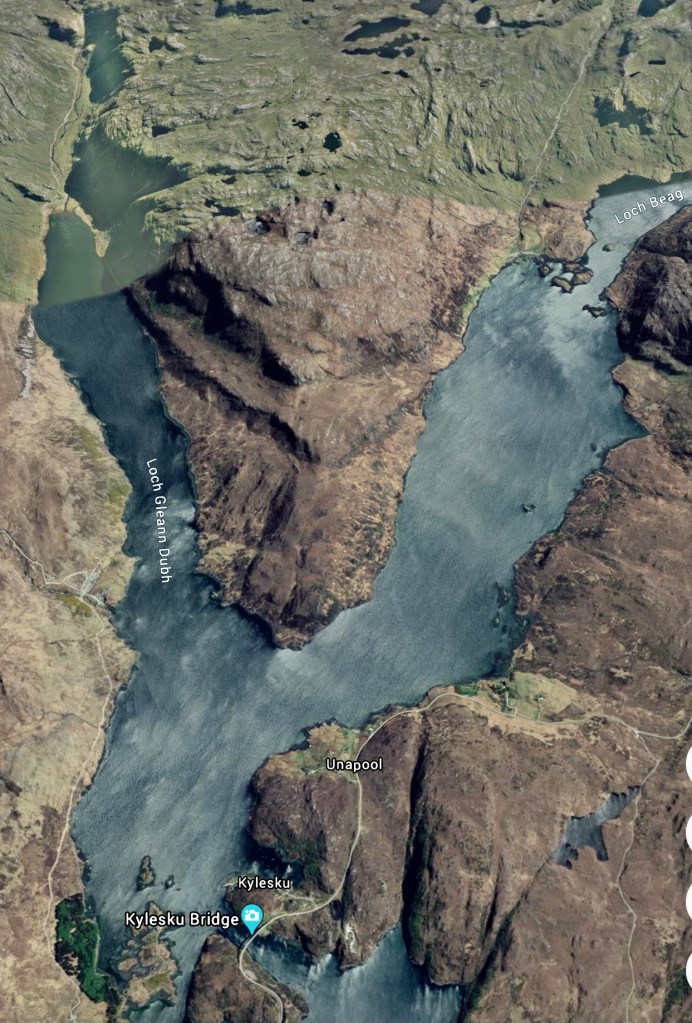
There are four easily accessible lochs all within a small area Loch a’ Chàirn Bhàin (White Cairn Loch) which comes in from the sea and narrows further inland at Kylesku. This leads into Loch Glendhu (Gaelic: Gleann Dubh) to the north and Loch Glencoul to the south, at the head of Loch Glencoul lies Loch Beag.
Loch Glencoul is the site of the UK’s highest waterfall, Eas a’ Chual Aluinn (Waterfall of the beautiful tresses.) With a drop of over 200 metres this makes it higher than Niagra when in full flow.
It’s also a destination popular with geology students as here you can see the results of continental collisions. Known as the Glencoul Thrust. It is a significant discontinuity where ancient Lewisian Gneiss has been pushed above 500 million year old Cambrian Quartzite. Even from the road you can see a base of Lewisian Gneiss with Cambrian next and then another layer of Lewisian Gneiss. Further up the loch there is evidence of the Moine Thrust which is just below the stac of Glencoul. If you visit Knockan Crag you can also touch this geological boundary.
Which is cool because you can see rock from the ancient continent of Laurentia and the place you’re standing in is only as it is because of the Iapetus ocean closing around 430 million years ago.
Geology Rocks!!!
https://www.earth.ox.ac.uk/~oesis/nws/loc-glencoul.html
Loch Glencoul: Continental collisions laid bare
Getting there
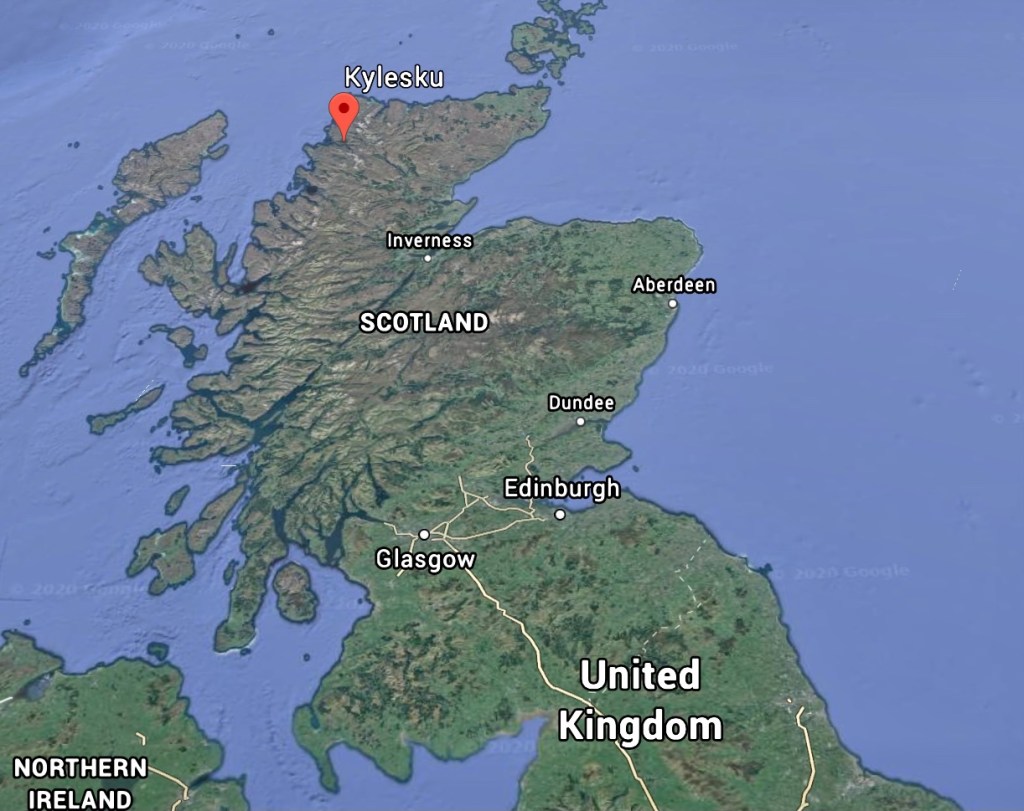
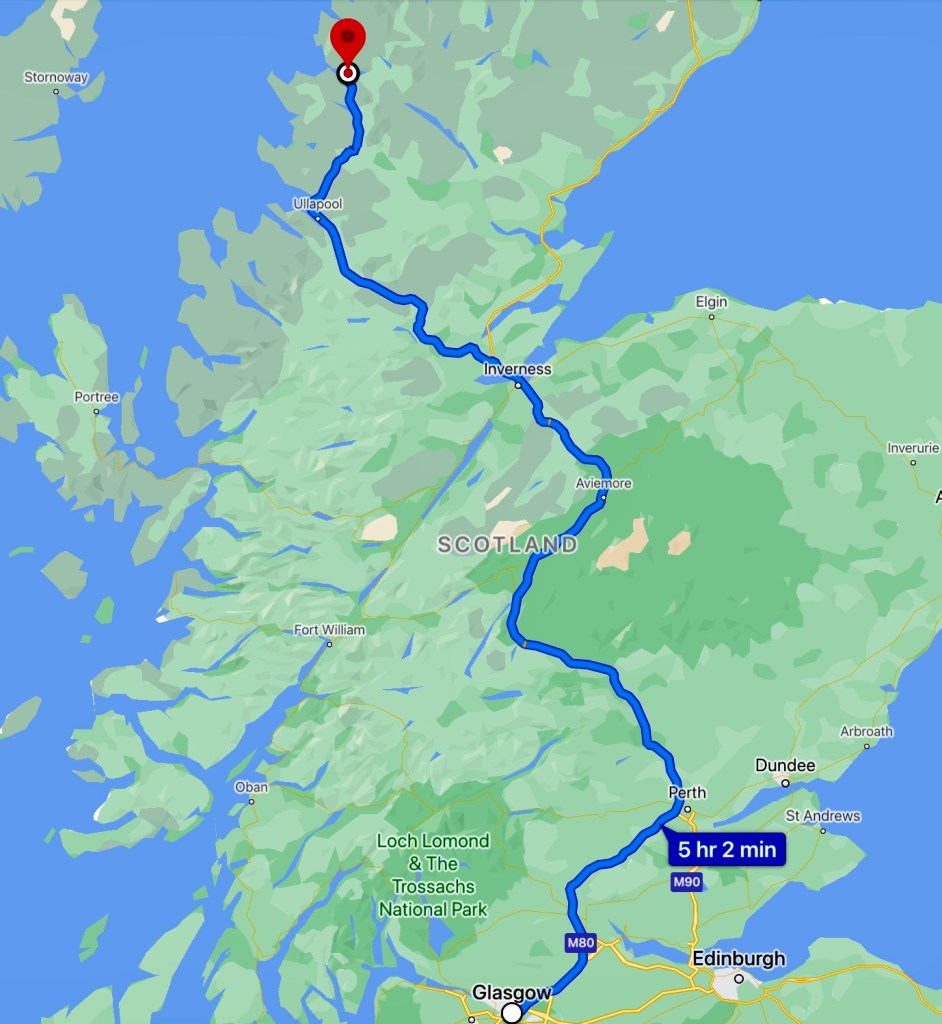
This trip was a three and a half hour drive from Portree on Skye. One hundred and fifty miles of mostly amazing scenery, far too many places to stop and gaze upon the incomparable west coast of Scotland. For reference I’ve shown the distance from Glasgow.
Amanda and I drove from Portree after spending a week on Harris & Lewis. I had mooted the possibility of her joining me on the trip and camping at the end of the loch but in the end it was a solo trip.
Go
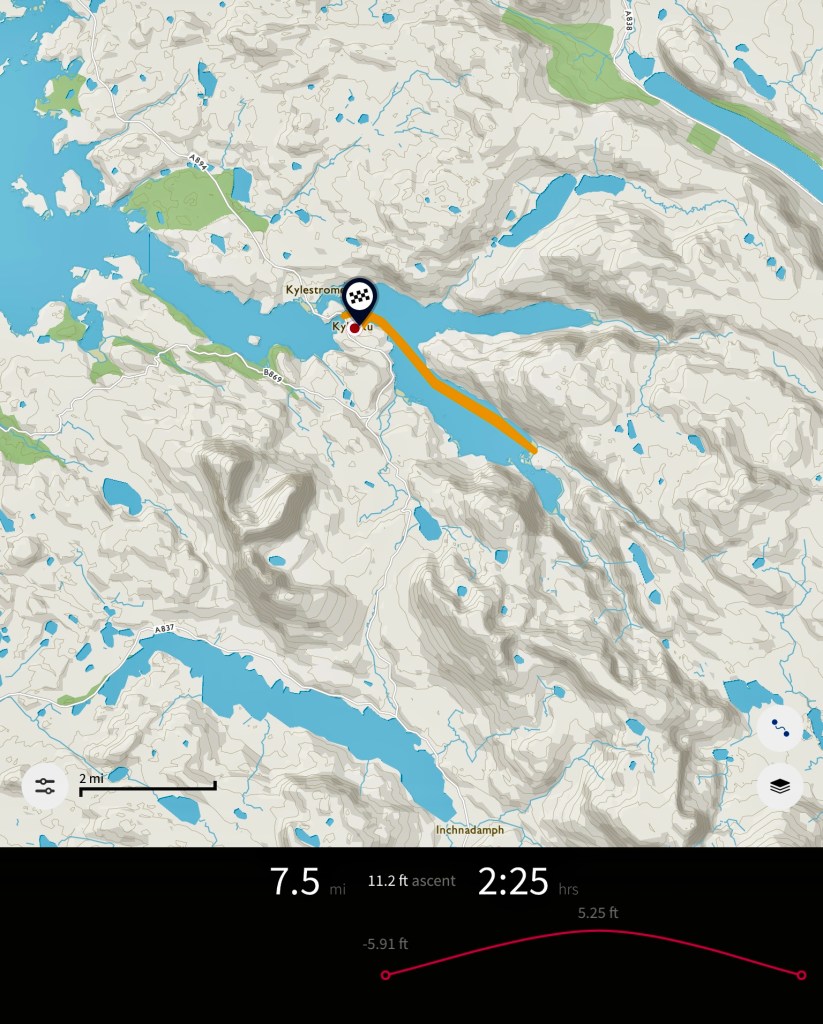
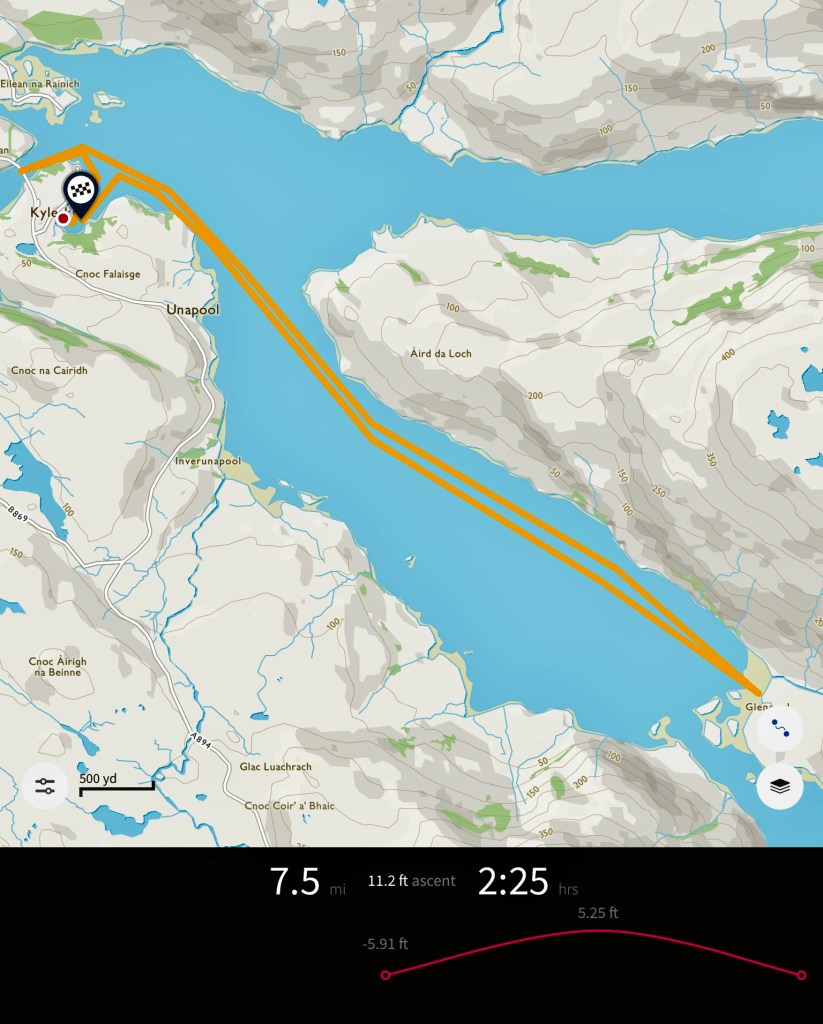
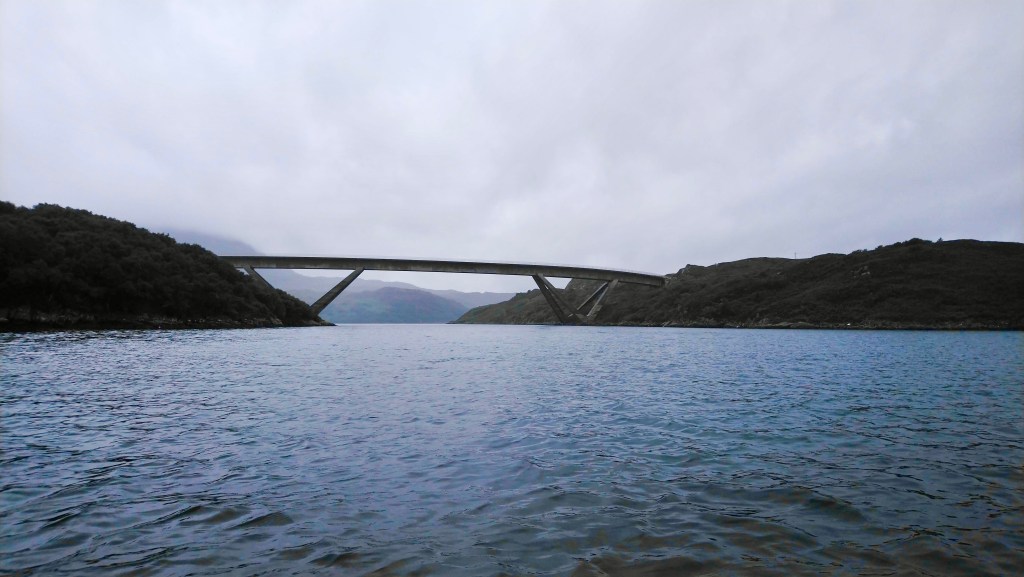
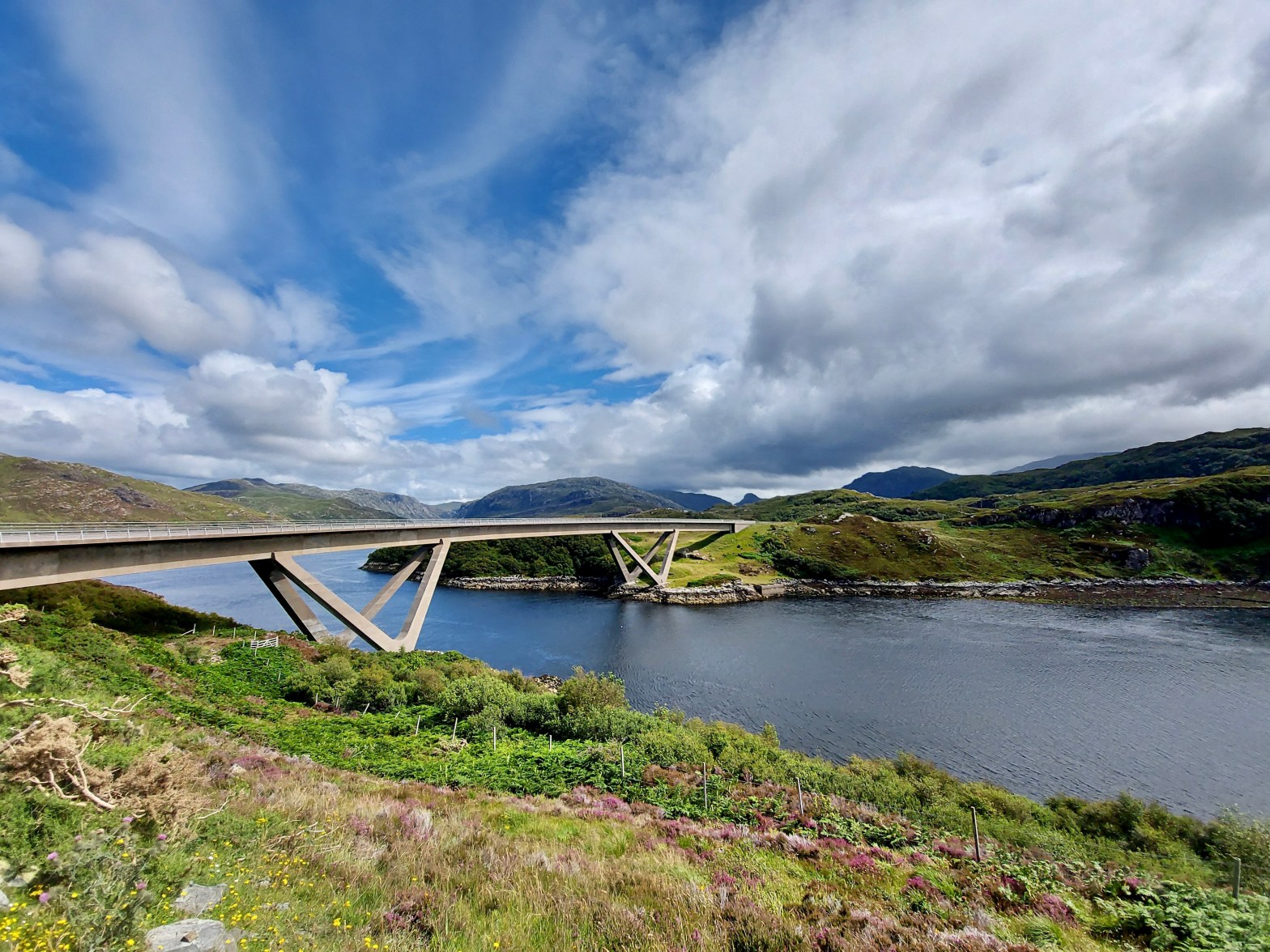
The Kylesku Bridge since 2019 it’s officially known by its Gaelic by its name Drochaid a’ Chaolais Chumhaing
I launched into Loch a’ Chàirn Bhàin from the slipway at Kylesku although the real starting line of the journey had to be from the iconic bridge itself. This is a ten minute paddle from the slipway.
The bridge has been classified by Historic Environment Scotland as being a Category A structure, recognising it as “visually striking and technically innovative”. Opened in 1984 it had been designed by Ove Arup whose original design brief, it should be “sympathetic to the surrounding country.” Considering it is a concrete box girder bridge I certainly feel it more than achieved the brief. It really does have the most spectacular curve.
Prior to the opening of the bridge there had been a ferry service operating between Kylesku and Kylestrome.
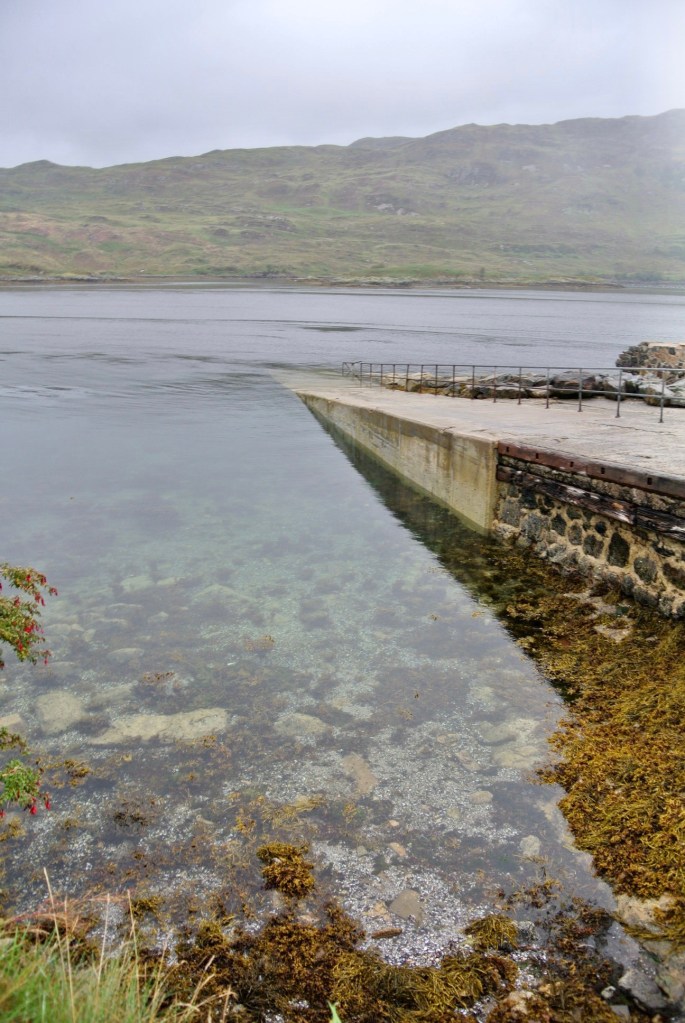
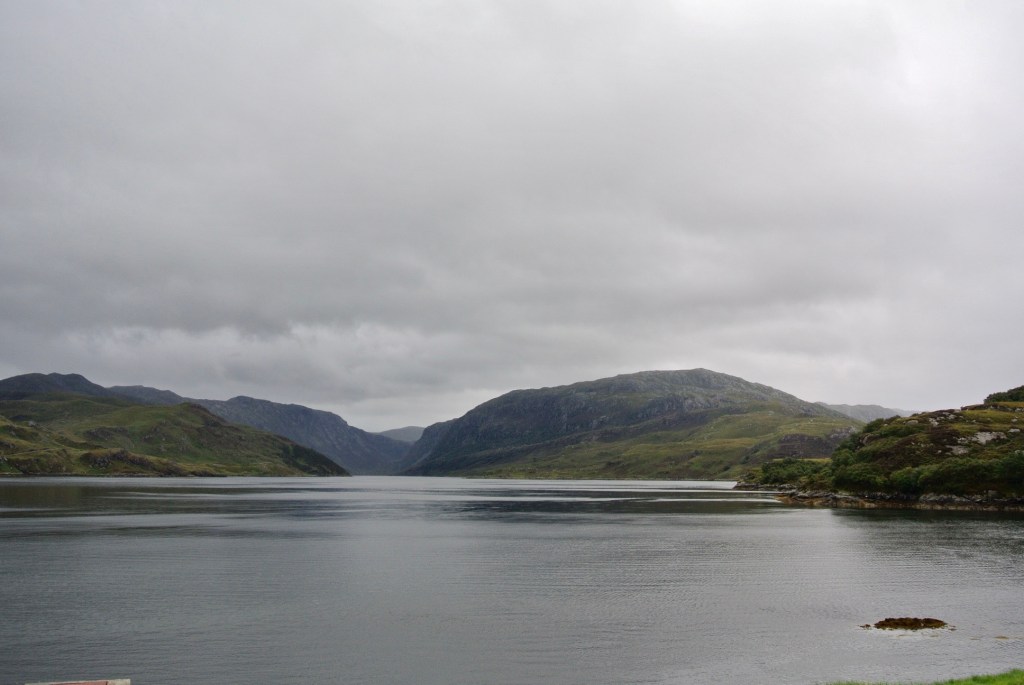
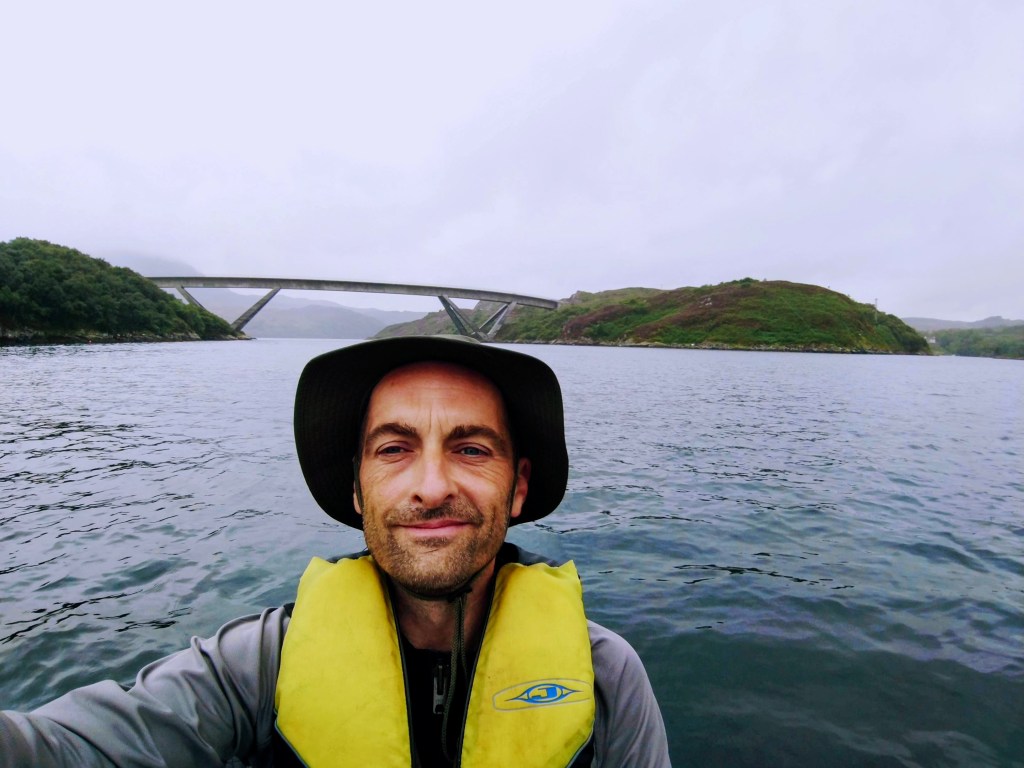
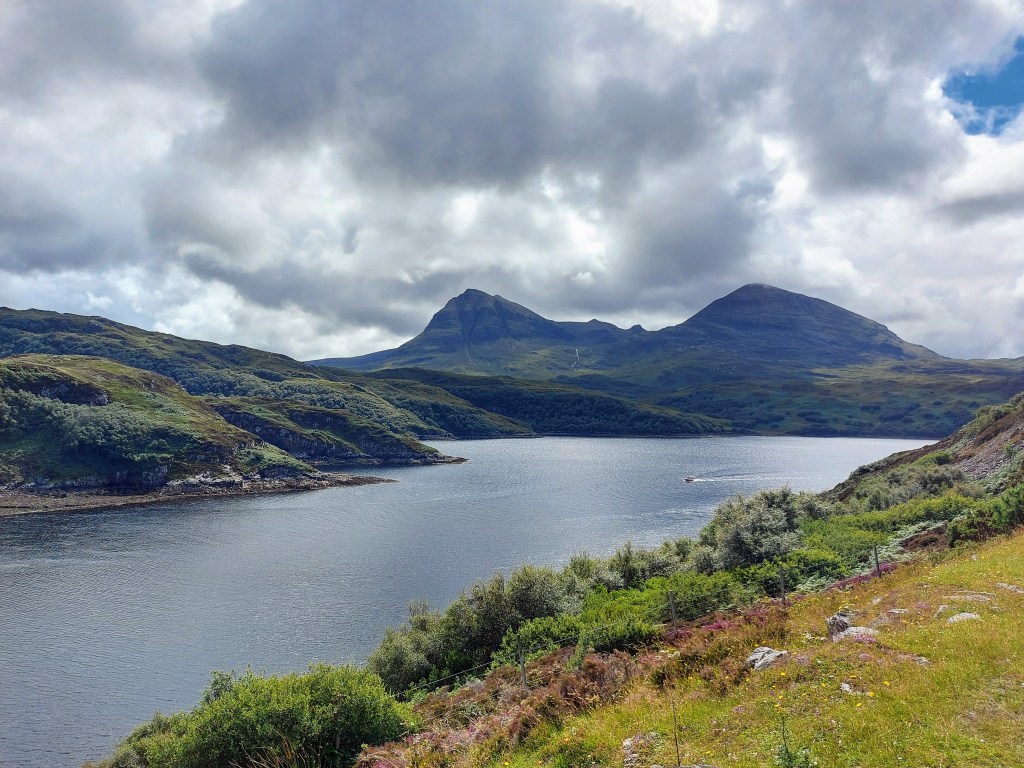
I’d thought so much about this trip imagining myself right here and getting under the bridge I could see the conical like peaks of Sail Ghorm and Sail Gharb. There was a gentle breeze but nothing too strong.
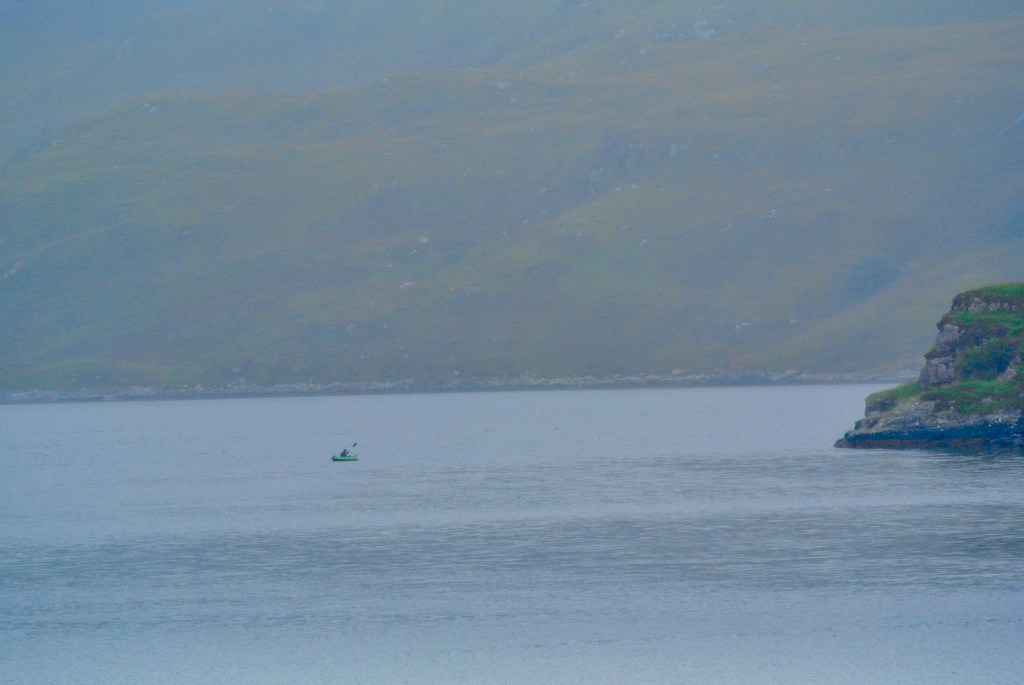
I decided once I’d gotten around the bend that I would hug close to the northern edge of the Loch which meant crossing the rather exposed Loch entrance to reach it.
This was the first sea Loch I’d attempted, whilst I’ve undertaken many trips on some of the larger inland lochs the introduction of tides brings an altogether new element into paddling. Still the weather forecast was good and my research on the loch showed that tides were not normally a huge issue.
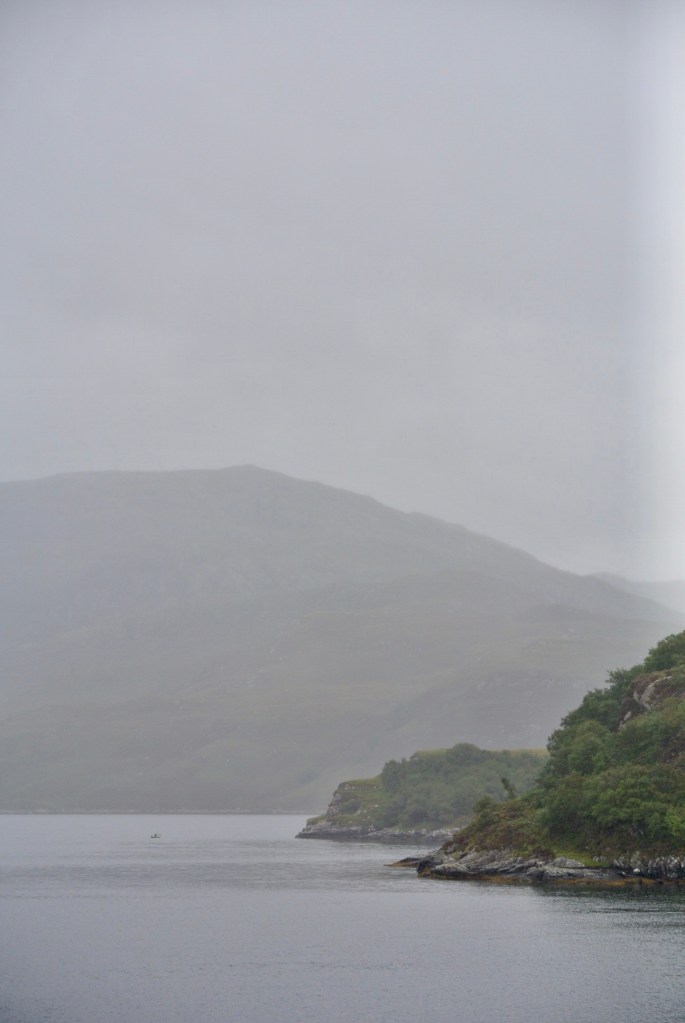
The crossing was around three quarters of a mile through fairly choppy waters, the wind coming down the loch from the sea but pushing me onwards a little.
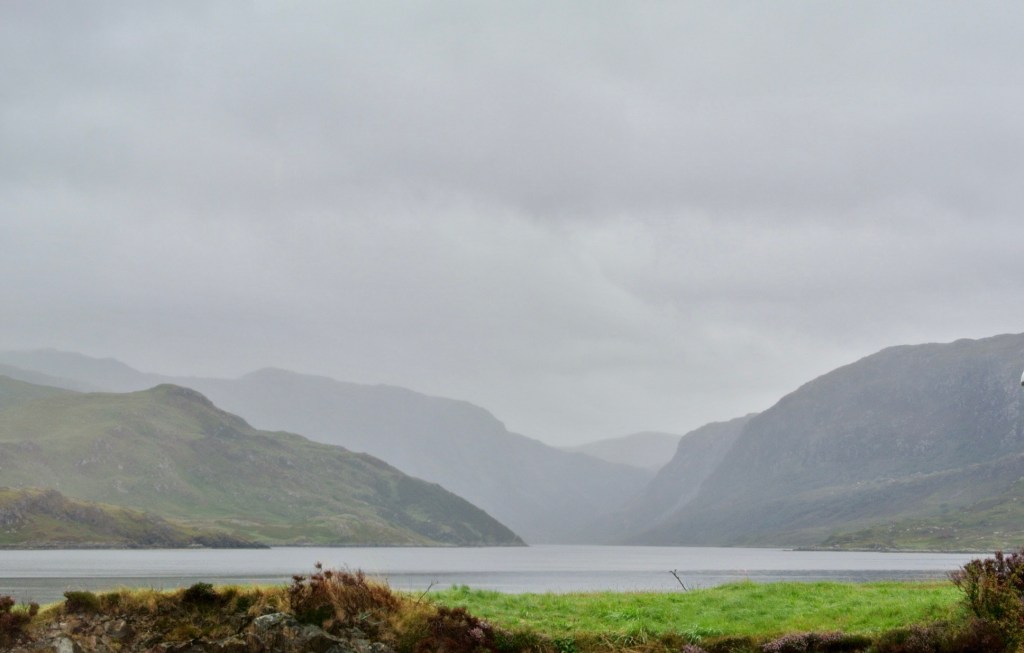
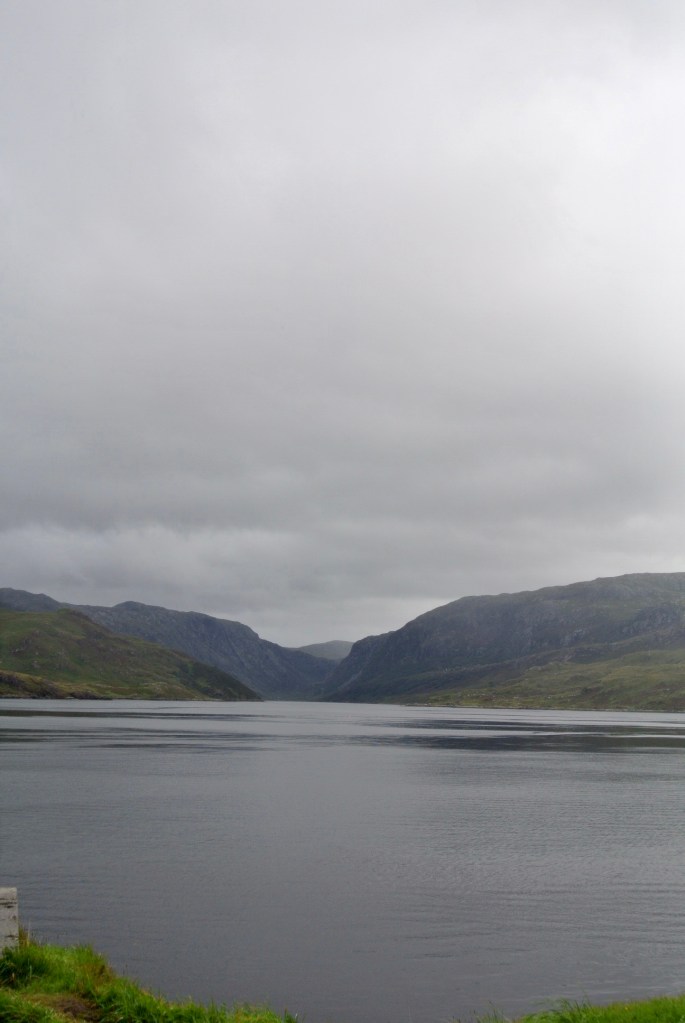
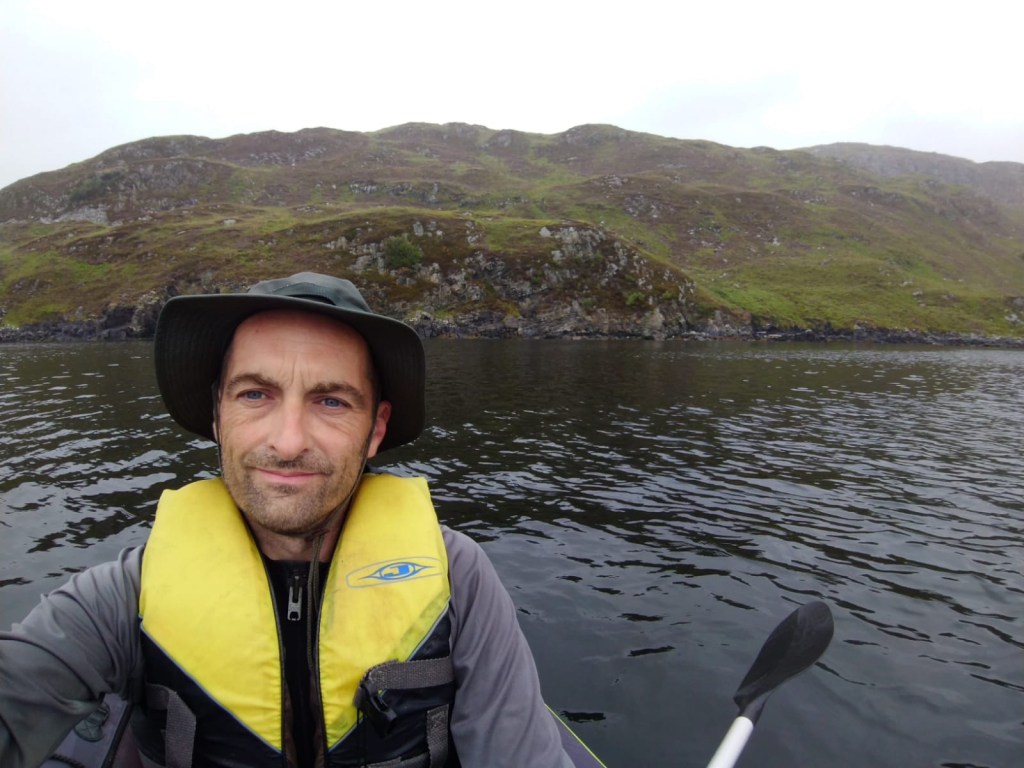
By now I’m getting closer to the waterfall, I can already see the end of the loch. I’d swung out away from the coastline in order to get a better view of the falls.
A couple of times I feel something hitting the bottom of my kayak, it’s a strange and uncomfortable feeling. In freshwater lochs when that happens it usually means you have hit or scraped rocks. This was a different sensation and not something I had any previous point of reference to which leads to internal mind games, what on earth was that, has something taking a dislike to the boat or does it think I’m something else? I carried on paddling and it happened again and then again.
I’d stopped paddling at this point, more than a little unnerved. I could hear swishing noises coming up from deep below me almost as though there was an underwater tussle happening. It was so quiet at that end of the loch that even sounds coming from underwater could be heard.
I could sense that this was happening just to the left of the boat. At least now I knew or thought I knew that I wasn’t the target and that it was likely a fight below the surface, I just had to get out of the way and hope I could get out of the middle of whatever was going on down there.
Then I heard a spout behind me, when I turned around to look there was a water ring at least five metres across about five metres behind me.
As I’ve done dozens of times on previous trips I suddenly wondered why I’d decided to do this. I looked down into the water on my left hand side to see if there was to be any more movement. Within ten seconds of the spout I saw a large stingray coming diagonally out of the loch right at me. I remember being surprised I could see down that deep, then recognising the underside of the stingray, which with the way it’s gills and mouth are aligned looks like a face.
Instinctively I thought there’s fucking no chance you’re coming in here which I found myself saying out loud in the most northern my accent gets as I hit it really hard in the mouth. It’s change of direction was instantaneous and it streaked away to the right never to cross my path again.
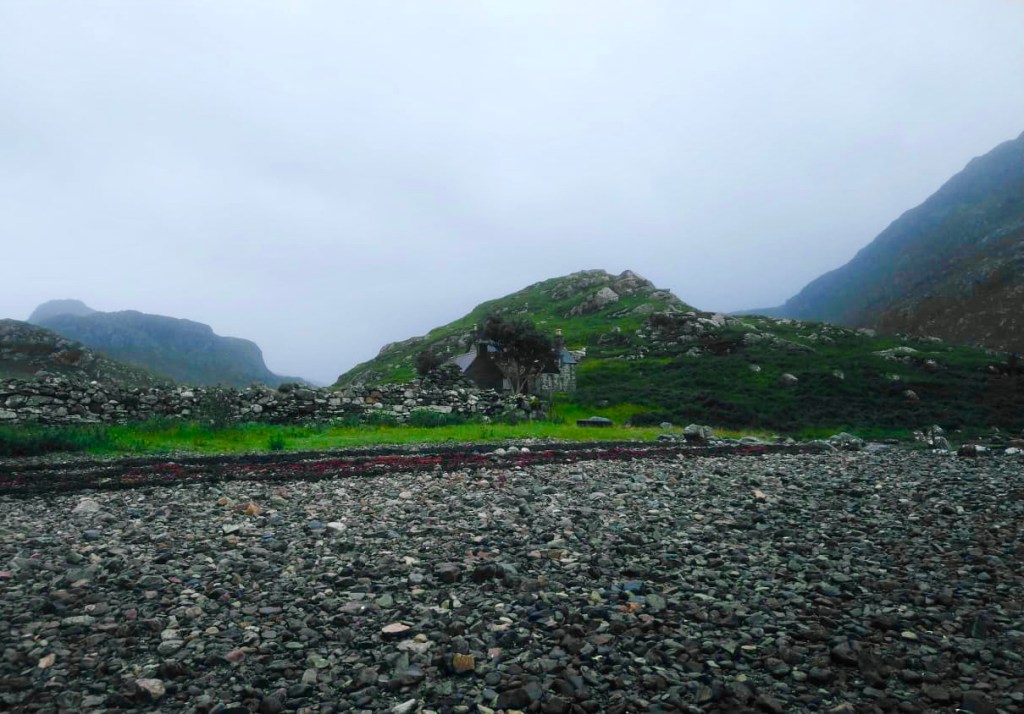
The waterfall was virtually non existent at that point and after the encounter I’d had I wasn’t hanging around to take pictures. Whilst rays are generally docile creatures there have been instances when people have been injured or famously as Steve Irwin was, killed.
At the head of the loch there is Glencoul bothy and a spooky old farmhouse, it may well have been the weather, the incident or even the remoteness it was a very lonely, dark place that day.
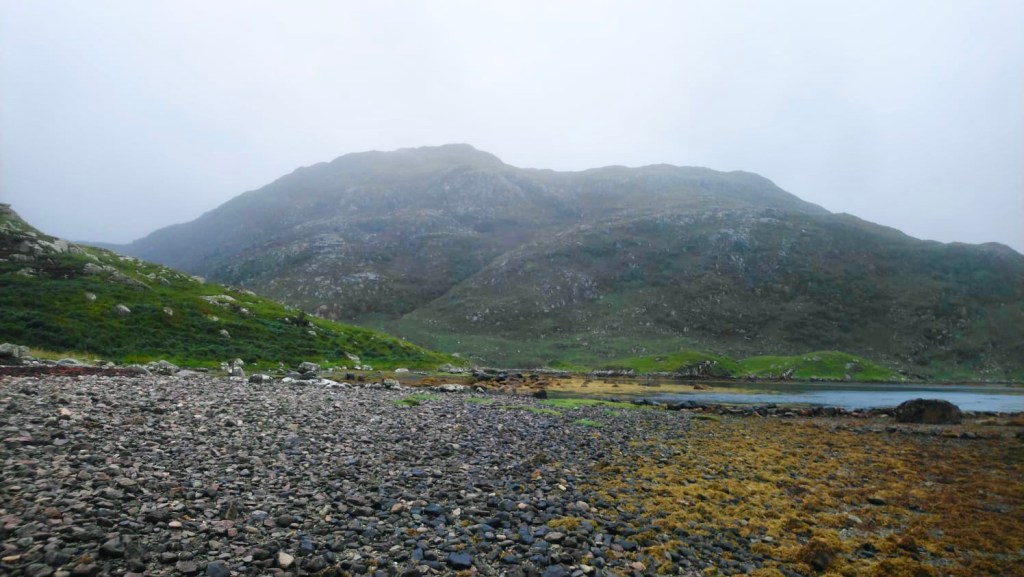
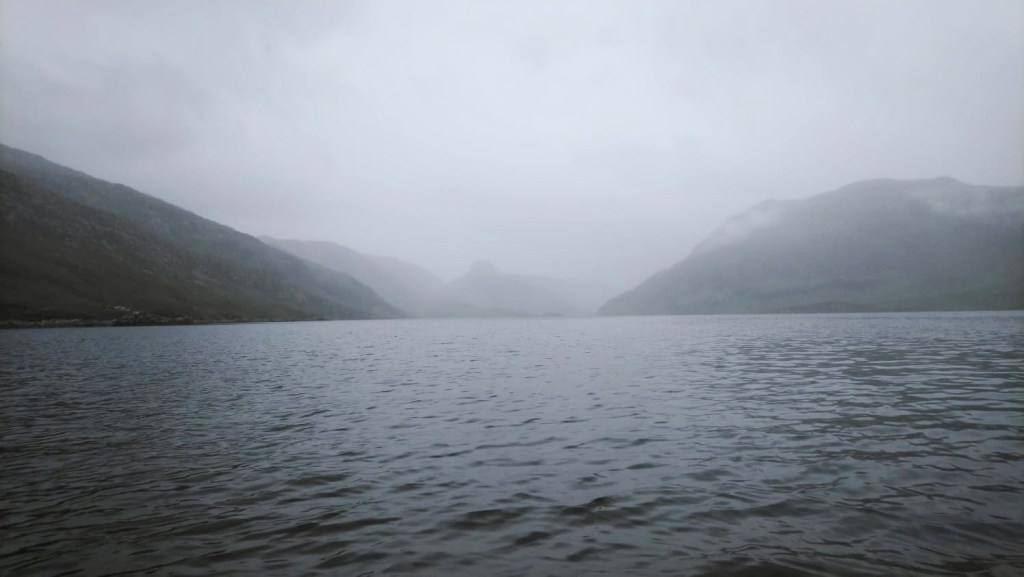
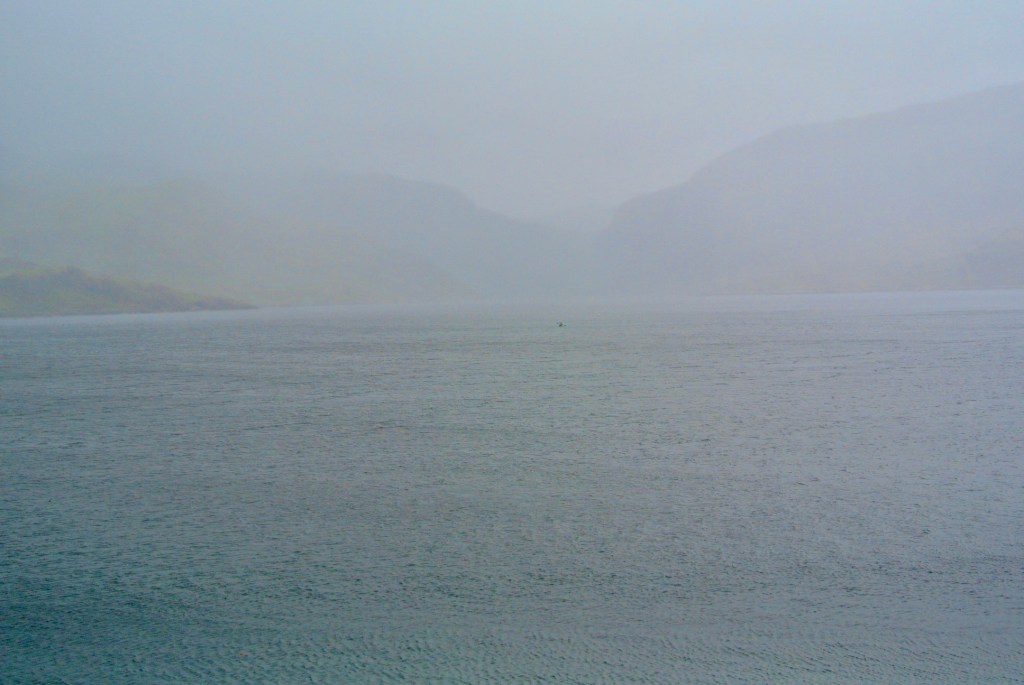
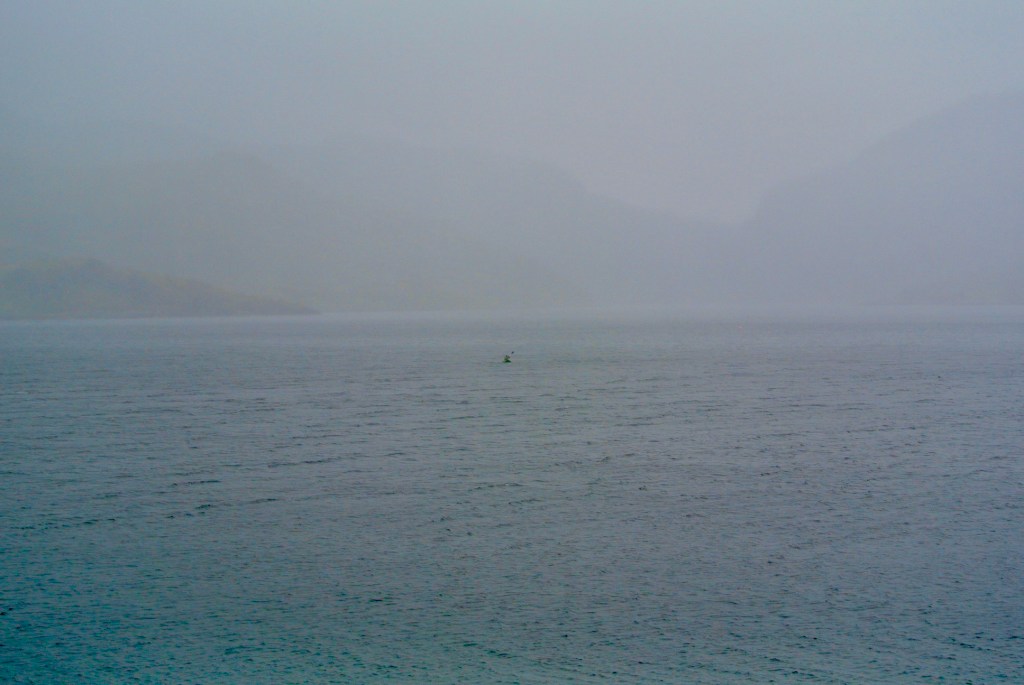
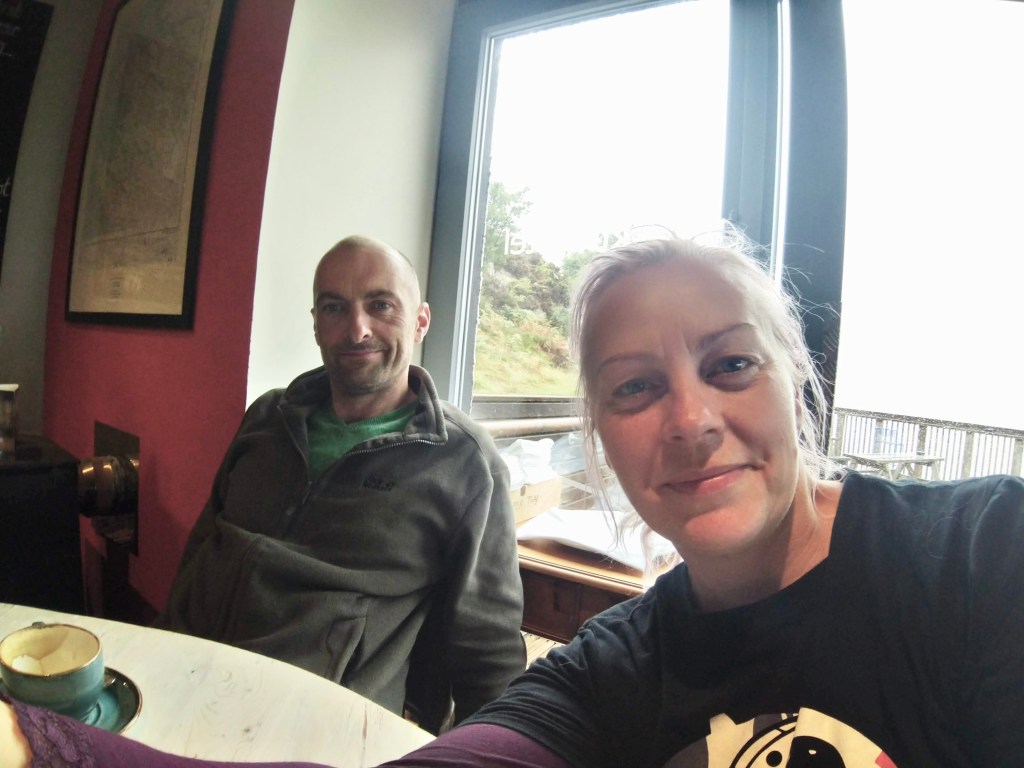
Coming out of Loch Glencoul and into the bay the weather turned quite nasty with a mist dropping in, lots of rain and a wind howling in from the sea pushing against me. I knew Amanda would be able to see me at this point, hopefully she wouldn’t be able to see how tough the crossing really was. As it was my lovely wife could see me through the window of the Kylesku Hotel whilst she sat warm and dry drinking gin.
Meanwhile out on the loch in the wind and the rain and the mist I battled on. Once I was clear of the wind that came in from the sea and rushed through the narrows at Kylesku things really settled down but for the 45 minutes it took me to reach that point it had been a real struggle.
This trip remains one of my favourites, the remoteness of Kylesku and venturing into further wilderness in quite spectacular surroundings made a hugely memorable trip.
I looked into why rays jump out of the water later on, there are three possibilities. To escape a predator, give birth or shake off parasites. I think it was trying to shake off a predator which given the spout and the tussling that went on it was either a whale, dolphin or porpoise.
 Kayak & Cycling Tours of Scotland