Introduction
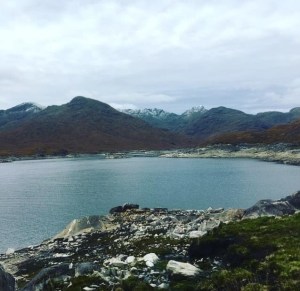
In his book Scottish Canoe Classics Eddie Palmer describes Loch Quoich as being a “bare, sometimes gloomy place, hemmed in by mountains.”
Mentioning wild camping he goes on to say “that a wilderness camp at the western end of the loch surrounded by high mountains is unforgettable.”
Those two quotes were enough to pique my interest and I started to research the area further. Song of the paddle is an excellent resource for water based trip details and conditions. Walk Highlands have details of terrain and numerous walks that can be undertaken.
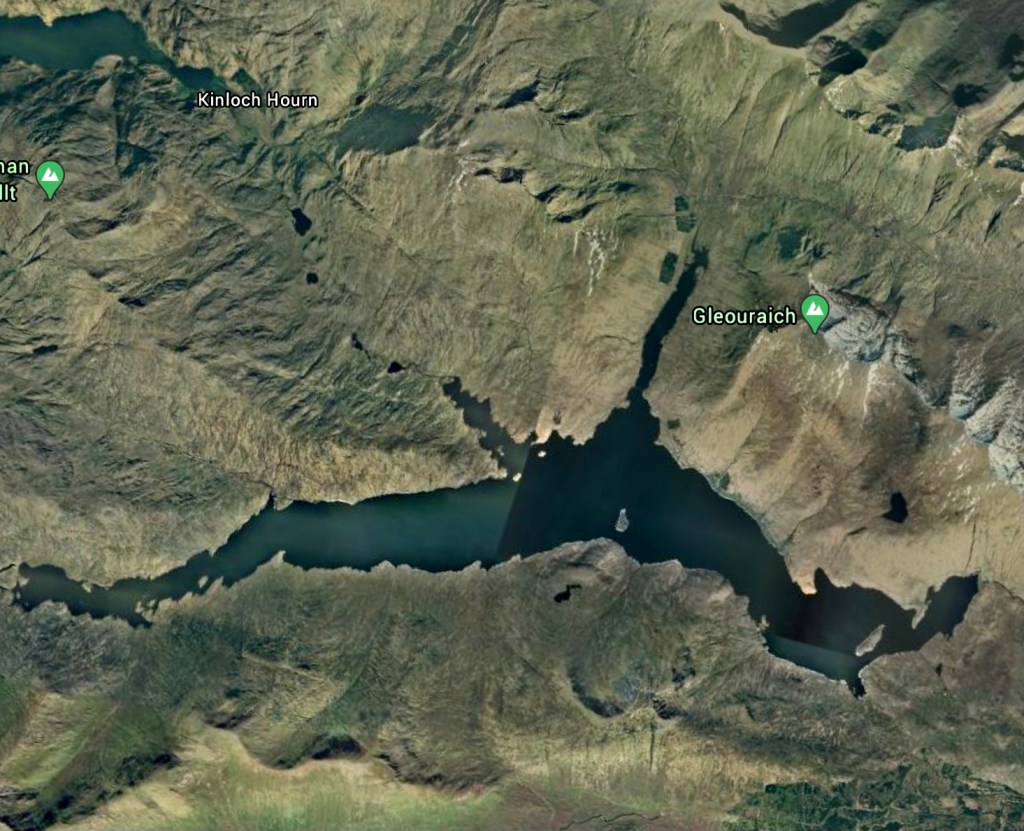
The western end of the loch reaches out into the Knoydart peninsula and the rough bounds of Knoydart. It’s one of the last places in Britain without a road to the only village on the Knoydart peninsula, Inverie.
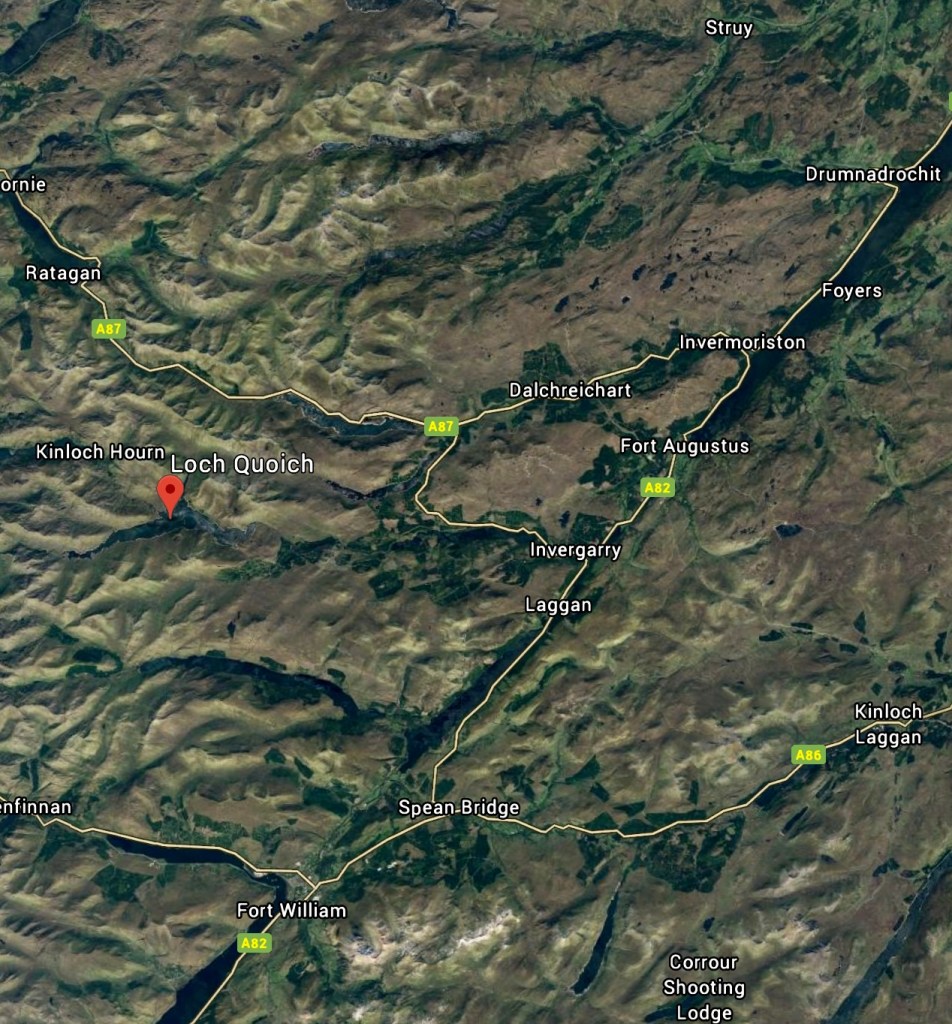
Loch Quoich (Scottish Gaelic: Loch Chuaich) is a loch west of Loch Garry (Scottish Gaelic: Loch Garraidh) and some 25 miles north of Fort William. The name means “loch of the quaich” or Loch (of the) Cup. It’s thought that this may refer to the cup- shaped ‘system’ of glens which form numerous parts of Glen Quoich.
Getting there
From my home in the North West it was a seven hour, 275 mile drive. Accounting for rest stops and traffic I concluded this would be more like a nine hour trip.
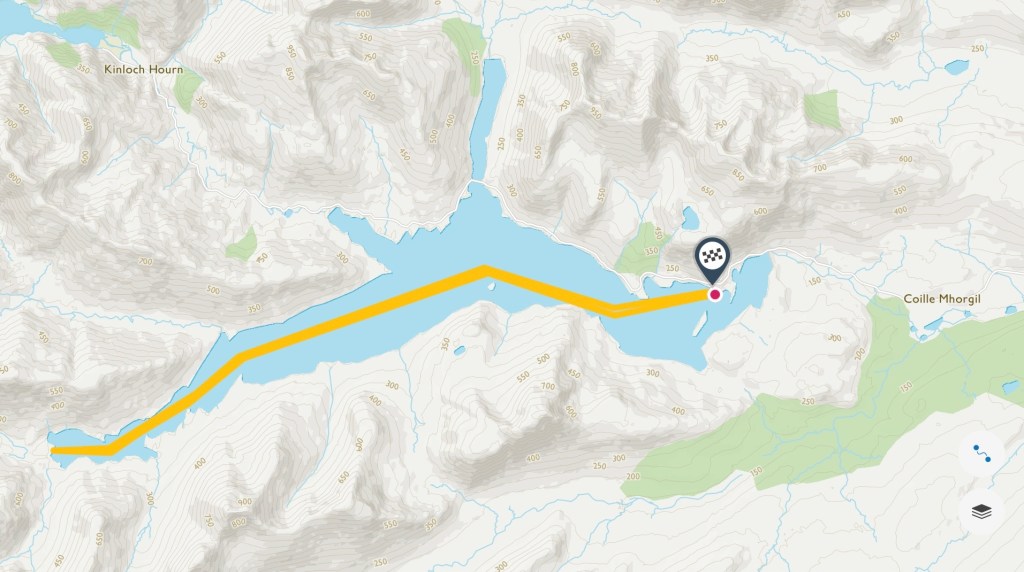
My plan was to paddle the loch to the western end, camp the night and paddle back the following day. Watching the weather forecasts closely it seemed that the last week in November 2016 offered near perfect conditions. Cold obviously but no wind or rain at all.
In turn this meant I would need to launch on Saturday morning so I would leave Friday lunchtime arriving sometime late evening ready for paddling first thing Saturday morning.
Kit
- Vango Banshee tent
- Roll mat (optional)
- Four season sleeping bag
- Kayak & essentials
- 1 cooking pot & windshield
- Micro stove & gas
- Folding kettle & cup
- Toothpaste & brush
- 4 litres water
- Mosquito net
- Tick remover
- General first aid
- 4/5 meals
- Energy snacks
- Soap
- Clothes
It’s November, look closely at your thermal clothing. Double up on thermals, ensure socks, hats and gloves are thick and warm enough. Extra thick jumpers, heat holding tights and long johns.
I finally reached the loch around 9pm in complete darkness. Its an incredibly long drive from the North West of England but excitement builds the further north one travels.
The motorway ends just before Glasgow and soon after that you’ll pass by Loch Lomond and The Trossachs, through Rannoch Moor and the mountains of Glen Coe before skirting the shores of Loch Linhe on the approach to Fort William. Heading towards Invergarry where you take a left turn halfway down Loch Oich (Scottish Gaelic: Loch Omhaich)
After this it’s a drive along the shores of Loch Garry before finally reaching the dam at Loch Quoich. Don’t underestimate the drive, after Loch Lomond it’s generally a single carriageway with few places to overtake.
I found somewhere to camp reasonably quickly, it’s a mainly deserted place but can be difficult to find somewhere due to the terrain with some steep drops immediately off the road. I managed to find somewhere off the road and got a decent parking spot set back from the road. It wasn’t perfect but it was the best I was going to get in the darkness.
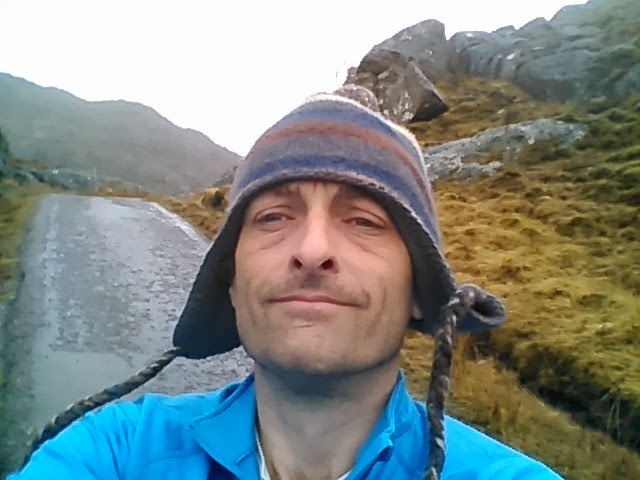
It took a while on Saturday morning to find a launching spot and I drove from the dam to the bridge and back searching for the easiest place to launch. I gave up on that and decided to make the best of it from my parking spot.
I was also still feeling the effects of the long drive so took my time over coffee and photo ops.
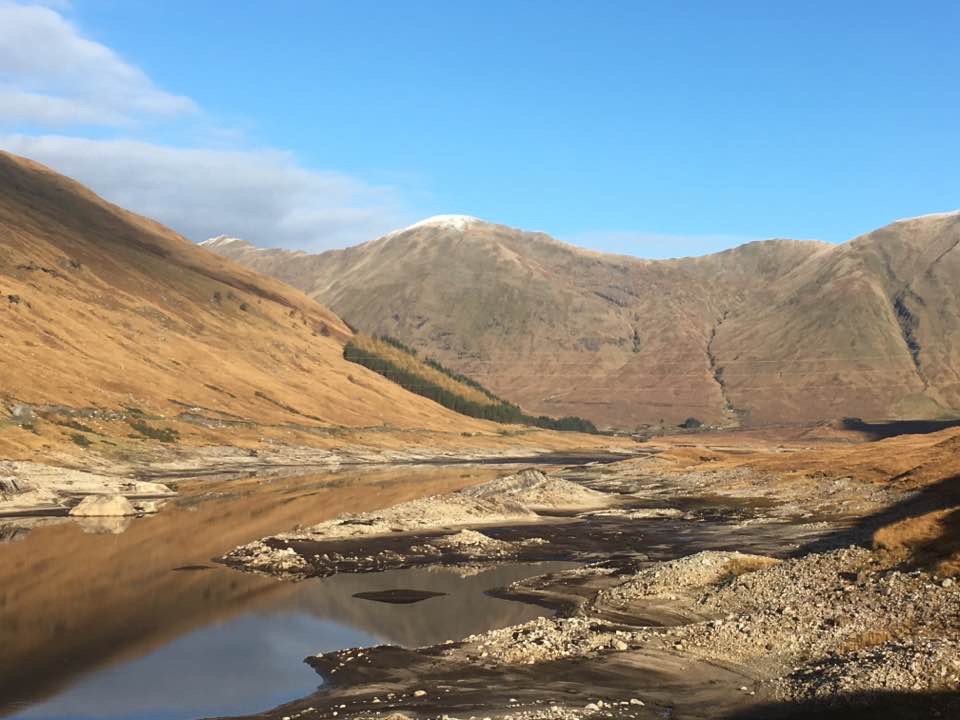
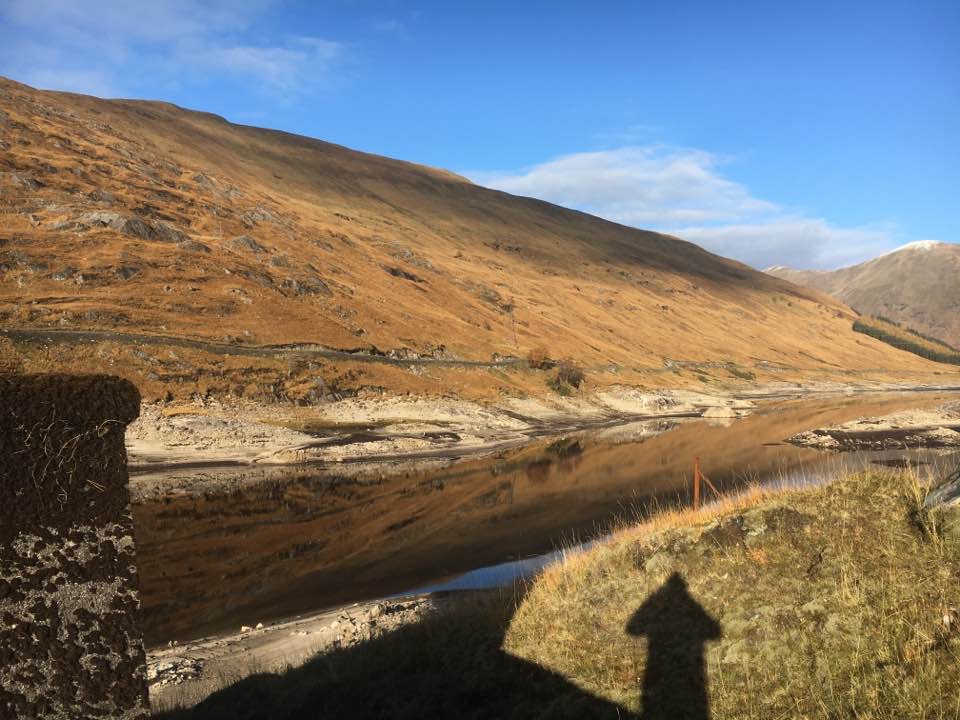
Around 80 metres from the loch but a steep downward gradient of 200 metres down to the shoreline. It was a long laborious process transporting the kit down, backwards and forwards as though I was doing supply runs and yes climbing was involved. This is the way, sometimes.
Another thing was the air, perhaps the chill of November made the altitude more noticeable? It took me over an hour to navigate my way down to the shore and I was out of breath a few times.
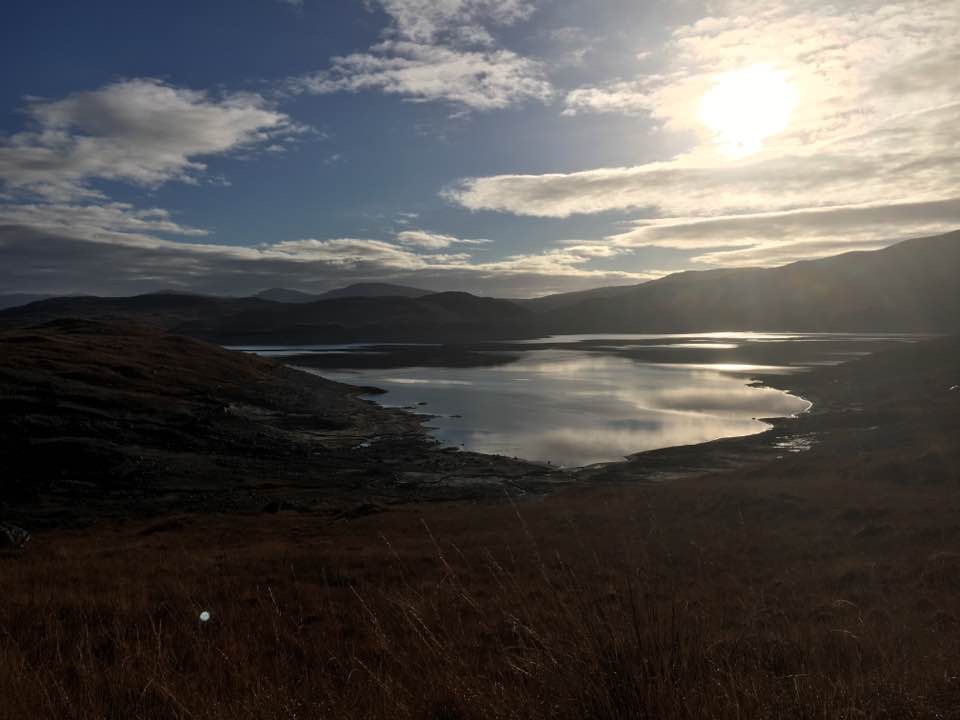
Finally I got down to loch level and was confronted with mud flats twenty metres from the loch itself. Seemed fairly solid at until I got a metre from shore and was suddenly knee deep in grey mud, slightly unnerving for a few moments until I realised I wasn’t sinking and I could get out.
After working out how to carry the rest of the kit without sinking into the mud I was finally on the loch. It was getting on for one o’clock by the time I launched. I estimated a paddle between three and four hours to the western end, I knew dusk would fully fall by six and I didn’t want to be on the water much later than than five if I could help it.
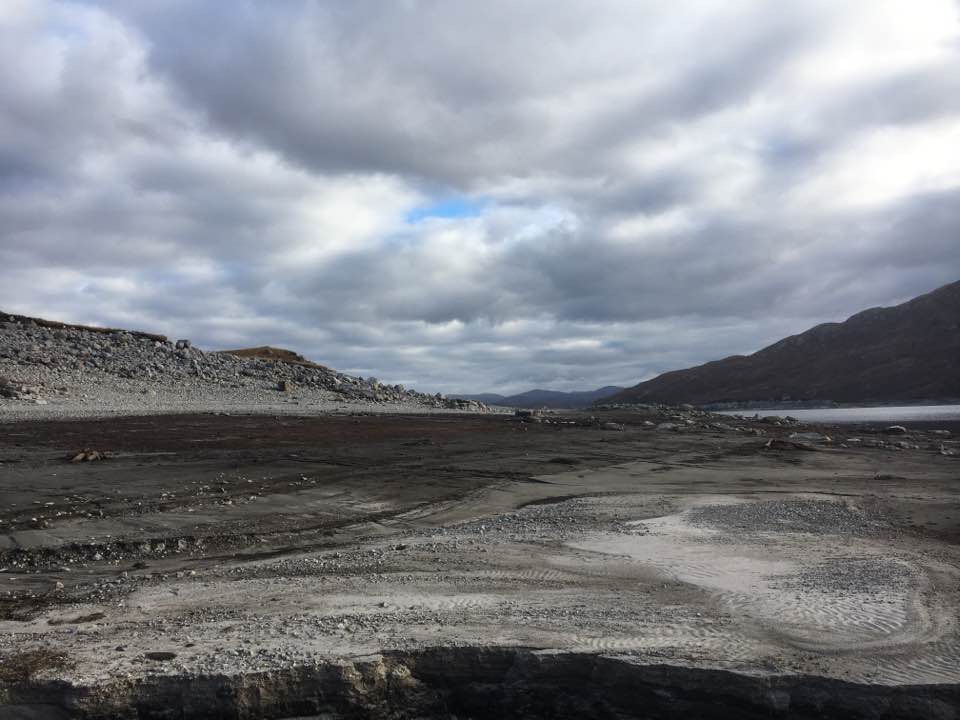
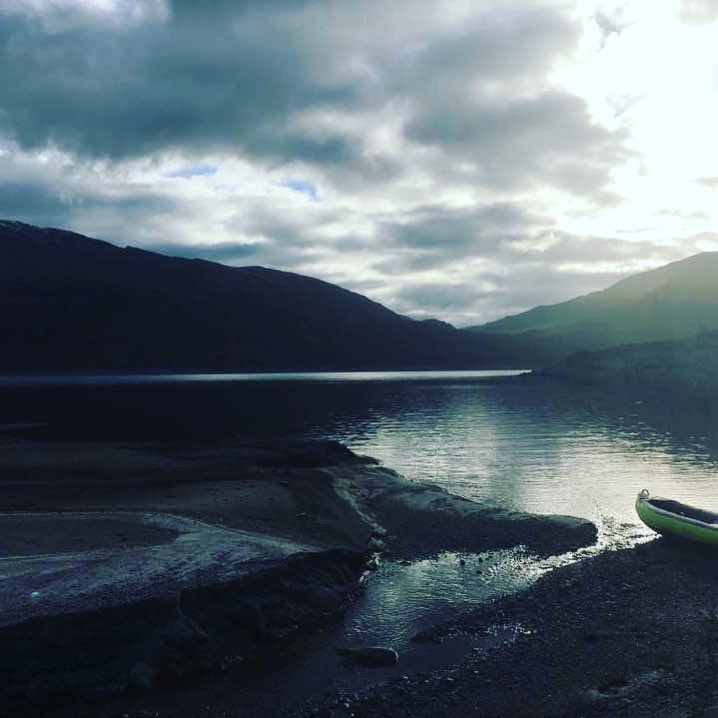
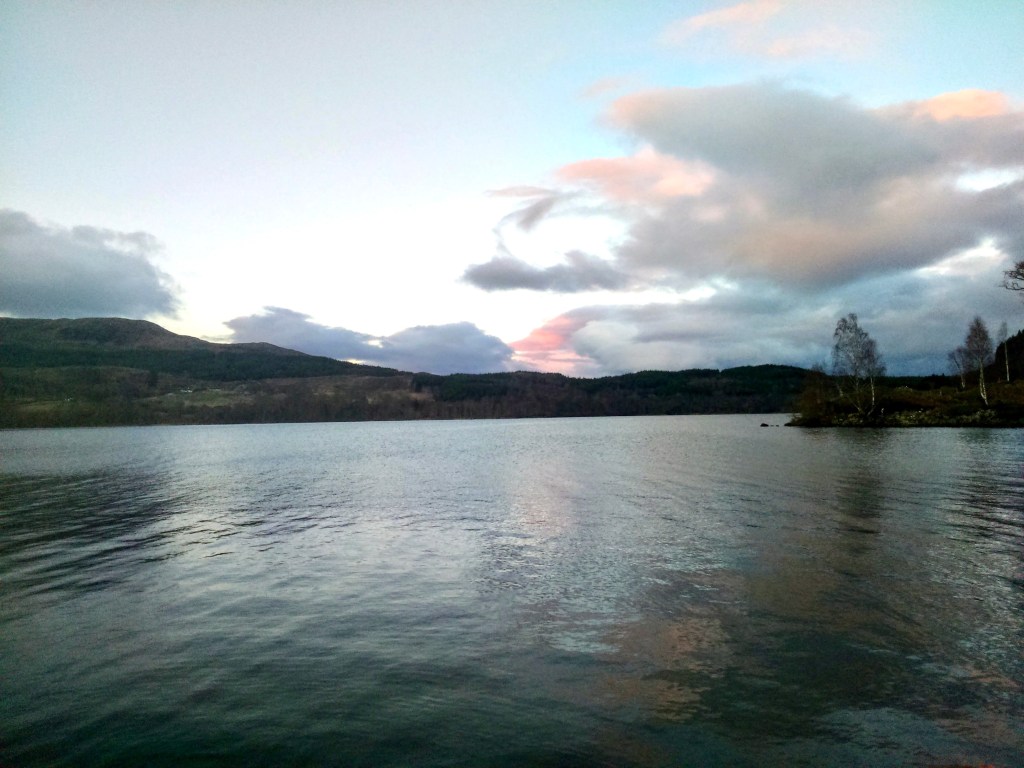
Conditions were excellent, water flat, barely any wind. The silence though was incredible, I paddled out around three hundred metres into a more central position and just lay back and took it in. Without doubt this is one of the quietest places I’ve ever visited.
The first few miles are fairly open until the road and the loch take different routes as they head through the mountains. Paddling was easy today and I was gliding down the loch at a reasonable speed.
For a few miles you pass through rock faces and impenetrable shore lines, lots of shadows and light and I can see why it was described as gloomy and foreboding. It is spectacular in its gloom though.
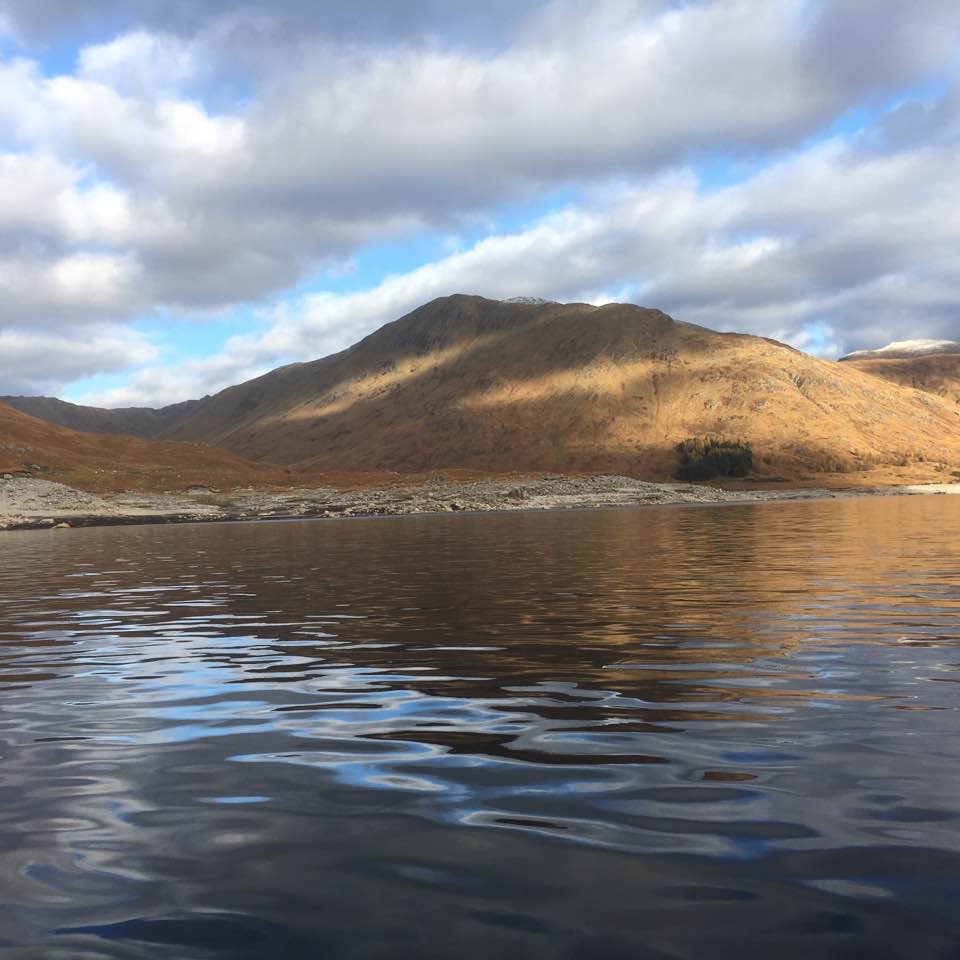
After 3pm I could feel the temperature starting to drop, I still had an hour maybe ninety minutes before I reached my goal. I stopped for refreshment and energy snacks in readiness for the final push towards the end of the loch.
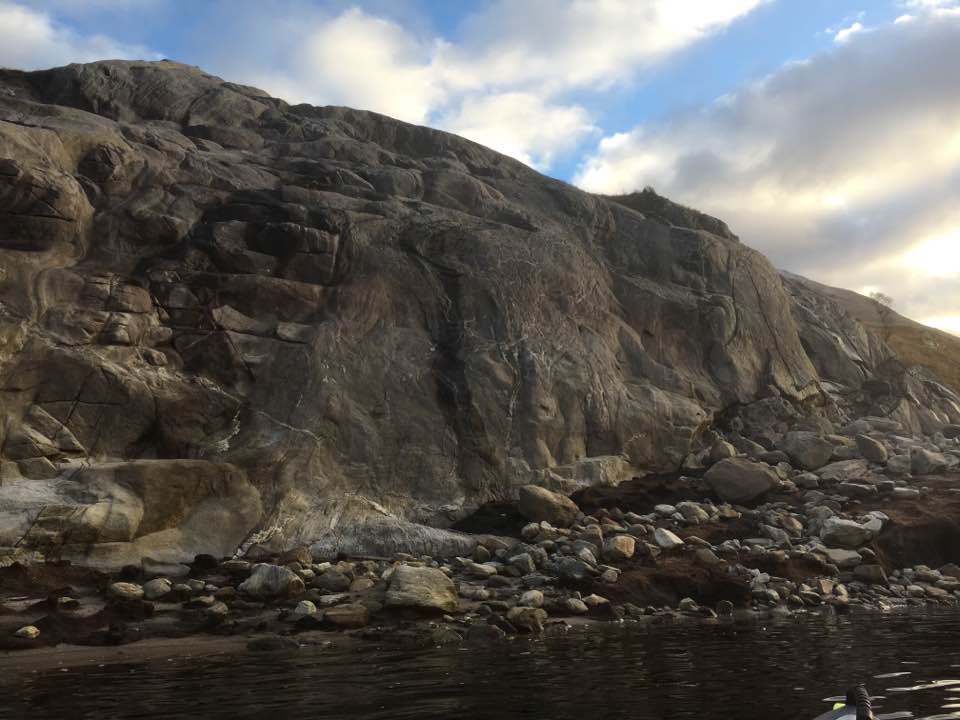
I reached the end point at five pm, the drop in temperature once the sun went down was very noticeable with the cold coming up through the bottom of the kayak. Now it was a race to find a good camping spot, I paddled back and forth looking for somewhere, the fading light didn’t help and I must admit I was slightly concerned. I eventually found somewhere but it involved a bit of a climb and dragging the kayak up a hill was hard work.
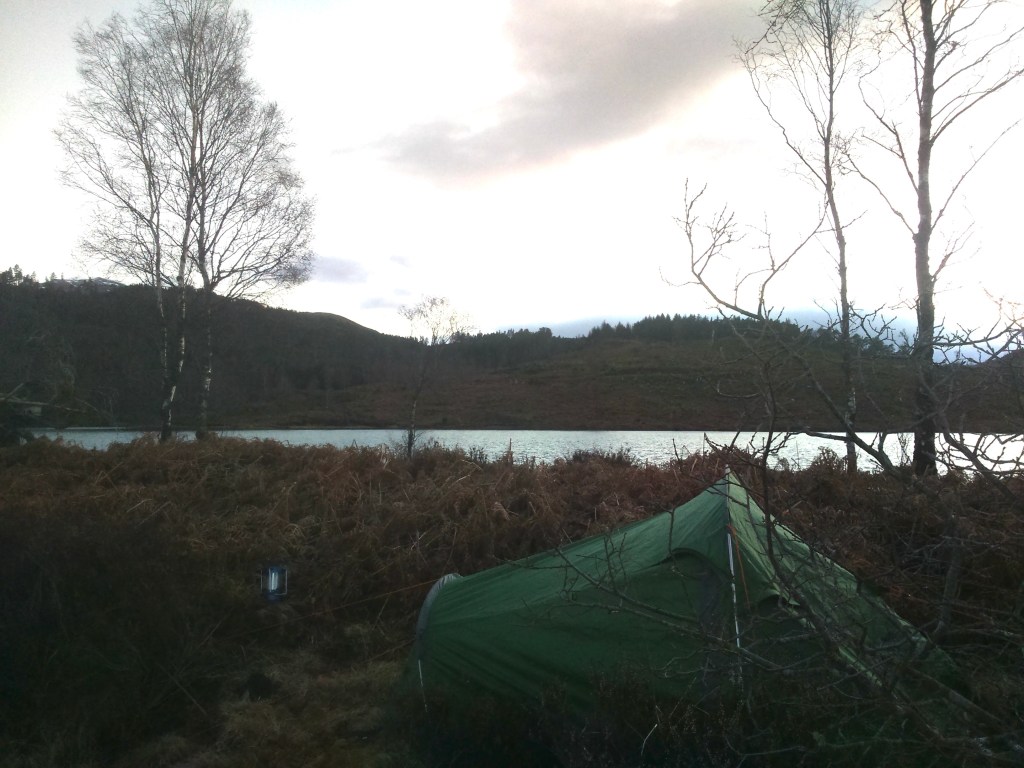
I had my tent up and dinner on the stove by six which wasn’t a moment too soon as dusk had fully fallen and it was getting colder with each minute.
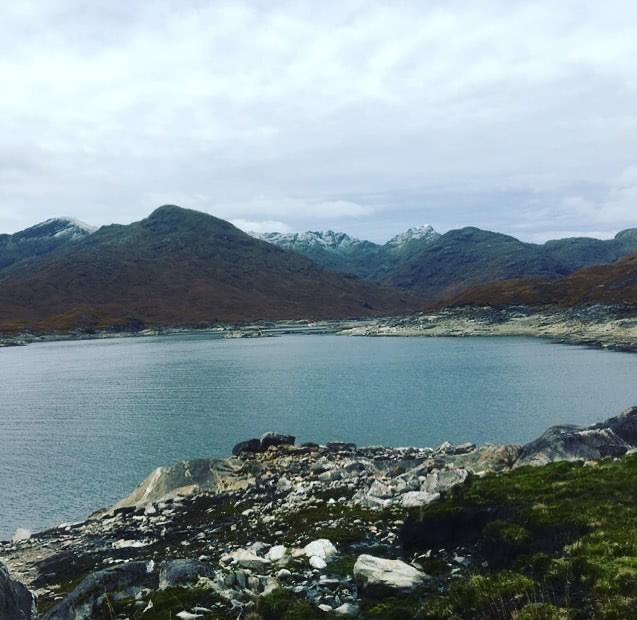
I was tucked into my sleeping bag by seven o’clock fully kitted out with thermals and heat holding tights plus very thick socks. I’d put an emergency blanket under my air bed in an attempt to reflect some of the cold.
It was a spectacular location and I was still feeling elated at having reached it plus I was happy that I was as far from other humans as it’s likely to be in Britain. That elation didn’t help much when I woke up at 3 am due to the bitter cold.
I was glad I’d brought extra clothes and quickly put them on as well as stuffing a blanket into my sleeping bag, seriously cold and shivering. Even with a four season sleeping bag and additional blankets it was the coldest I have ever been. The whiskey definitely helped with the cold.
Maybe it was the cold or the waking up freezing making my mind play tricks on me but I swear I could see the Northern Lights through the tent. I was seriously that cold I didn’t dare unzip the tent and take a look. A decision I regret to this day.
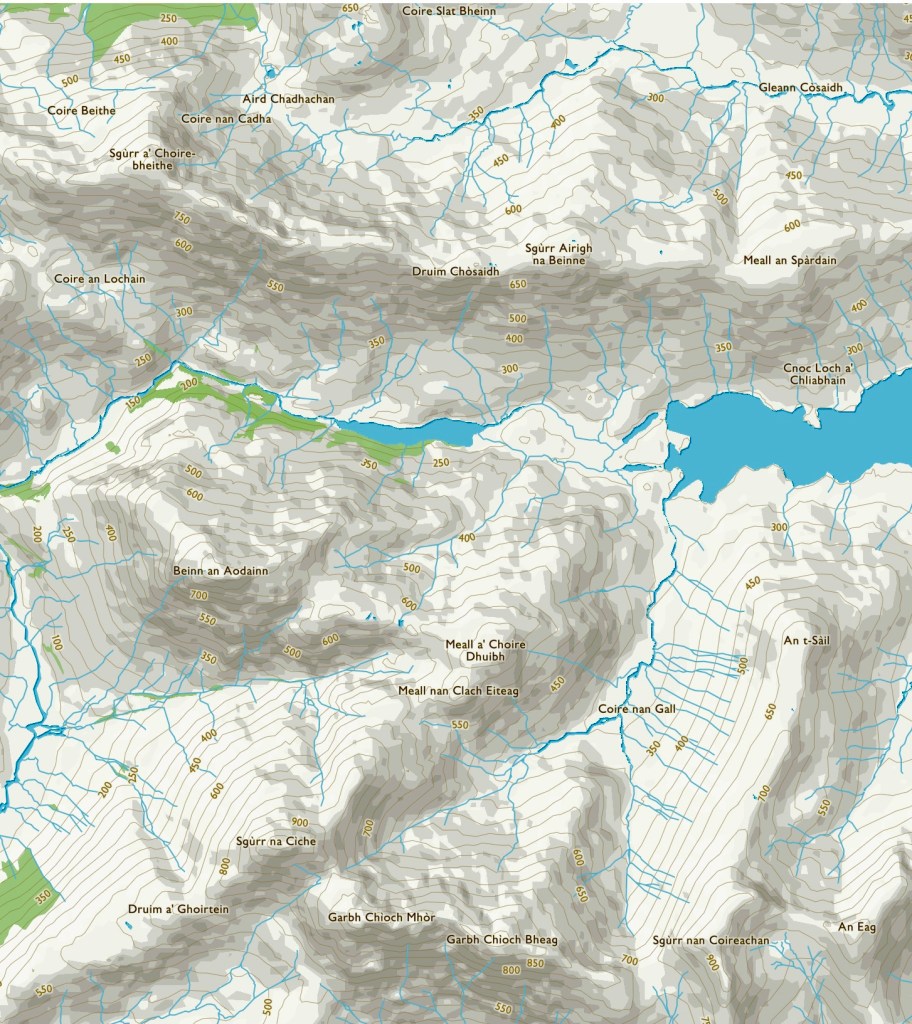
I stayed a couple of hours Sunday morning walking around marvelling at the view. I don’t think I’ve ever been this close to as many mountains. Ben Aden (Scottish Gaelic: Beinn an Aodainn) being one of the remotest corbetts and regarded as one of the finest Corbett climbs.
The paddling on Sunday morning seemed easier than the day before and was certainly warmer. I still had the task of hauling gear up the high shore but this seemed quicker than the day before, maybe I was still excited from the journey and having completed it.
Loch Garry
The drive away from Loch Quoich on Sunday morning revealed the spectacular scenery I’d missed driving down in the darkness of Friday night.
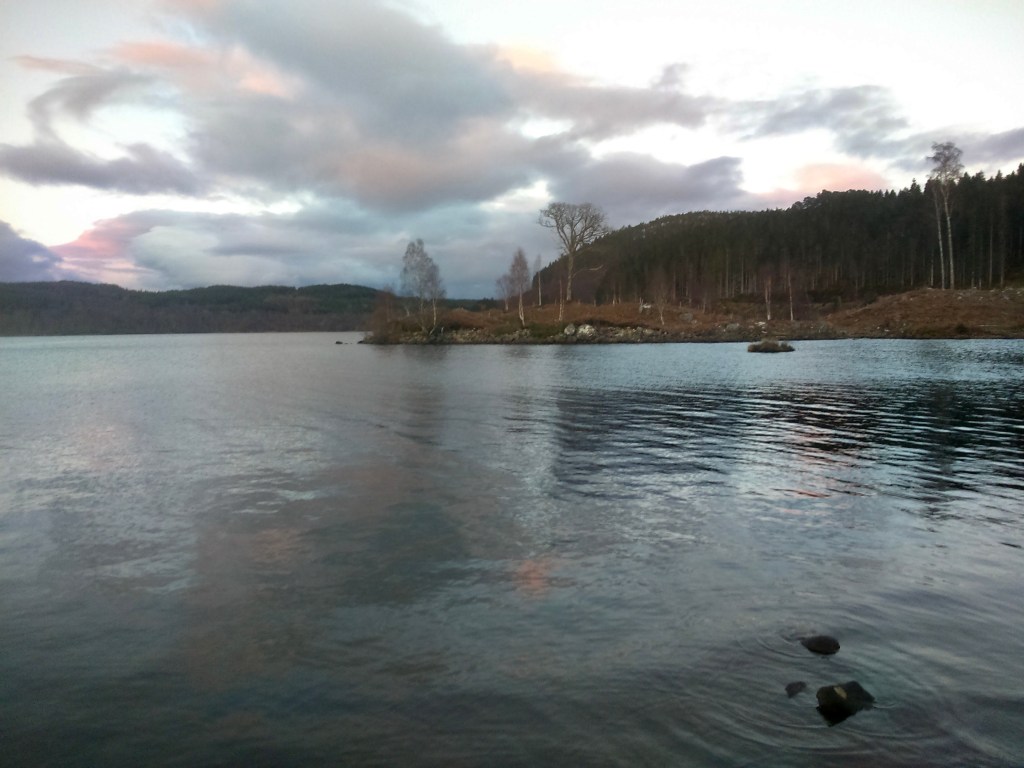
It is possible to travel the seven miles down the River Garry (Scottish Gaelic: Garadh / Abhainn Gharadh) and enter Loch Garry which is another seven miles to the end of that loch.
 Kayak & Cycling Tours of Scotland